Mother’s Day Brunch

Mother's Day

There is no one more deserving of a home-cooked meal than Mom. We would readily spring to the kitchen and whip up something for her any day of the year, but definitely always on Mother’s Day. While our bakery is filled with delicious things already prepared to dazzle (Cinnamon Rolls drenched in cream cheese frosting! Cloud-like Coconut Cream Tartlets!), you can never go wrong with the DIY route.

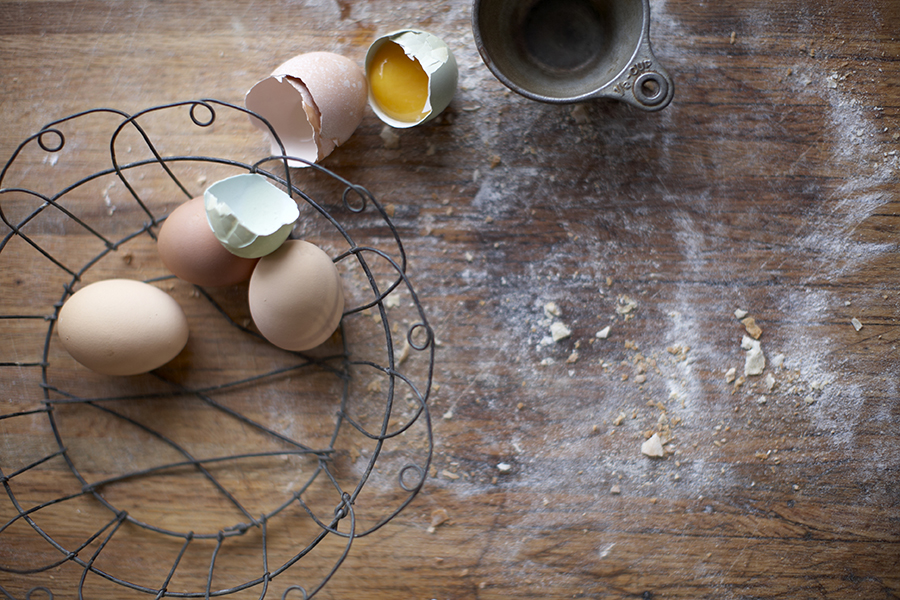
Our Mini Macrina Casera loaves are meant to spark creativity in the kitchen this Mother’s Day. We’ve packaged this miniature version of our popular house bread with a card filled with ideas on how to enjoy it. One of our favorites is sliced, toasted and topped with poached eggs and our savory Fennel-Sausage Gravy. We guarantee it will get Mom’s stamp of approval!

Fennel-Sausage Gravy
Click here to print this recipe!

Ingredients

1 medium fennel bulb with fronds
1 tablespoon pure olive oil
Kosher salt and freshly ground pepper
1 tablespoon canola oil
8 ounces (1 cup) bulk Italian chicken sausage
3 tablespoons unsalted butter
1/2 teaspoon whole fennel seeds, finely ground
1/4 teaspoon dry mustard powder
1/4 teaspoon freshly grated nutmeg
1/4 teaspoon cayenne pepper
3 tablespoons unbleached all-purpose flour
2 cups whole milk
1 1/2 cups heavy cream

Makes 4 Servings

1. Position a rack in the center of the oven and preheat to 375°F. Line a rimmed baking sheet with parchment paper and set aside.

2. Trim, halve and core the fennel bulb. Chop enough fronds to measure 2 teaspoons and set aside. Placing the halves cut side down on a cutting board, slice them vertically, then slice in the opposite direction, creating a 1/2-inch dice.

3. Toss the diced fennel with the olive oil, season to taste with salt and pepper, and transfer to the prepared baking sheet, spreading the pieces so they roast evenly. Bake for 15 minutes, or until the fennel is golden brown on the edges. Set aside to cool.

4. Place a large sauté pan over medium heat. Add the canola oil, coating the bottom of the pan. After about 1 minute when the pan is quite hot, add the sausage. Using a spoon, break the sausage into small pieces, tossing to cook thoroughly. When the sausage is completely cooked (about 4 minutes), pour it into a strainer fitted over a medium bowl to catch the rendered fat. (Often with chicken sausage there is little or no excess fat, but with pork varieties you may see more. You can substitute the rendered sausage fat for the butter called for in this recipe, if you like.) Set aside.

5. Return the sauté pan to medium heat. Add the butter and melt completely. Add the fennel seed, mustard powder, nutmeg, 1/2 teaspoon salt, and cayenne pepper. Sprinkle in the flour and, using a whisk, combine the dry ingredients with the fat to create a roux (cooked flour and fat that will thicken into the gravy). Cook for 1 to 2 minutes, whisking, until the roux is a deep golden color. Reduce the heat to low and add the milk in a slow stream. Whisk the milk into the roux as you go, combining it completely (almost making a paste) before adding more milk – if you add the milk too quickly, you’ll end up with those dreaded lumps! Add the heavy cream and reserved fennel and sausage. Cook for 20 to 25 minutes – you want to cook out the raw flour taste and all the gravy to thicken. Check the seasoning, adding additional salt and pepper to taste.

6. Ladle about 3/4 cup of warm gravy over toasted bread and poached eggs. Garnish with a sprinkle of parsley and reserved fennel fronds.

If you don’t use all of the gravy, it freezes well for up to 2 weeks. To reheat, simply warm it in a sauce pan over medium heat with a bit more cream or milk, stirring until smooth. You can find this recipe along with many more brunch favorites in our latest cookbook, More from Macrina.

In the Kitchen: Our Best French Toast

French Toast

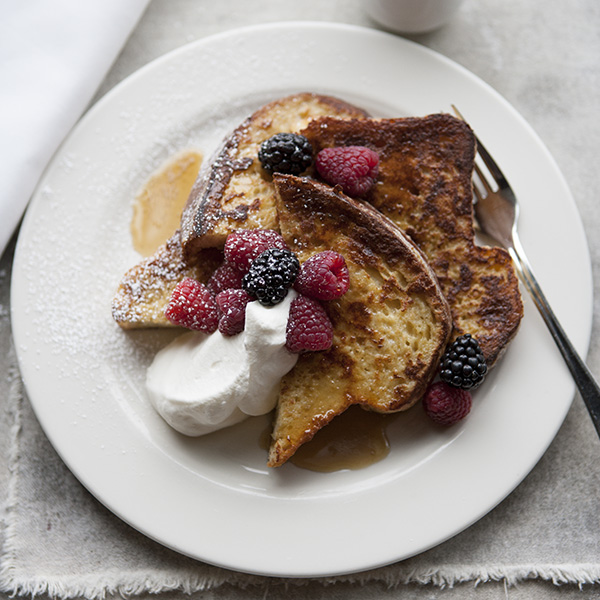
French toast is the king of weekend brunch. Each week, Head Savory Chef Elizabeth Hall creates a fabulous French toast for our menu. It’s usually stuffed with something amazing like sweetened ricotta or pear butter and topped with anything from seasonal berries and crème fraîche to toasted nuts and whipped cream. As we carry these stacks of toast piled high through the café, it’s never a surprise to hear people swoon. At the end of brunch service we know we’ll find plates scraped clean and lots of happy customers.

The best French toast starts with simple ingredients found in most kitchens and a really good loaf of bread. We reach for generous slices of buttery, sweet Brioche to soak up the eggy custard and caramelize in the pan. Adorned with a dollop of cream or a healthy pour of thick maple syrup, doesn’t matter. A delicious bread is the heart and soul of this meal.

Through Mother’s Day, you can pick up a loaf of our toothsome Chocolate Orange Brioche attached with the recipe for our favorite French toast. Whether you’re surprising Mom with breakfast in bed or treating someone special to an easy weekend brunch, this French toast will make anyone feel loved.

Rain Shadow Meats: A Cut Above the Rest

Rain Shadow Meats

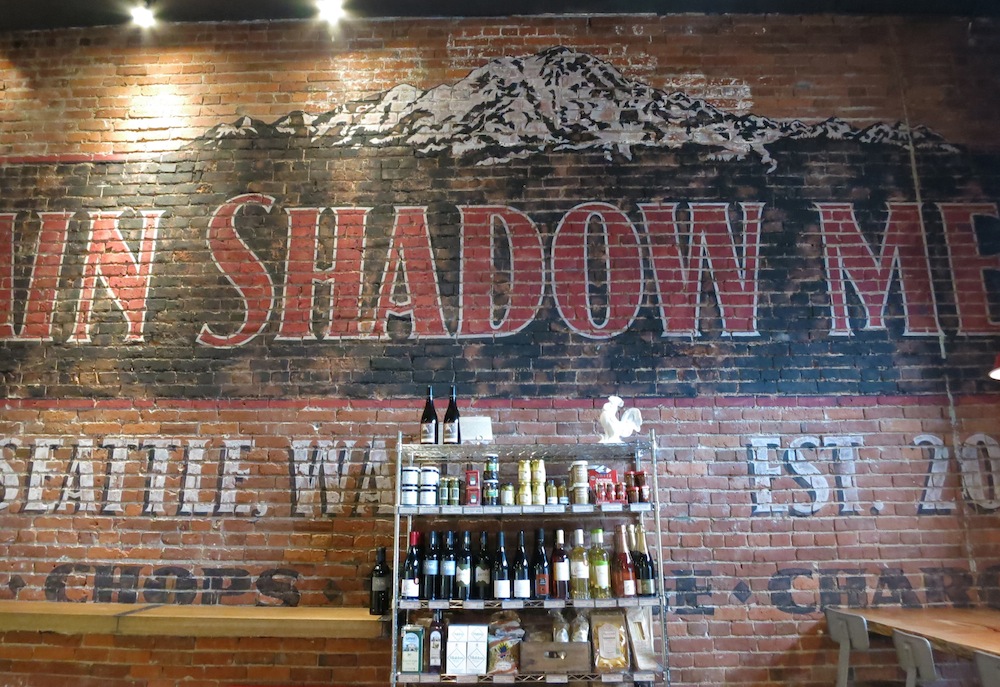
Tucked into Capitol Hill’s adorably hip Melrose Market and a new location situated in up-and-coming Pioneer Square, our wholesale partner Rain Shadow Meats is quickly becoming Seattle’s favorite butcher shop. We sat down with Owner Russell Flint to talk about how he’s changing the butchery business for the better, what’s on the horizon, and which cuts of meat you should be eating.

What makes Rain Shadow Meats unique?

We use everything. We throw some fat and little weird bits that we can’t really do anything with into the compost, but those bones don’t go into the compost until they’ve been worked into stock twice. We are really, truly utilizing every bit of these whole animals that we’re given, which I think is lost on a lot of people. But to me, it’s rad. Nothing goes to waste. Not too many butcher shops can say that they do that.

Are people going for the odd cuts of meat or do they tend to stick with what’s familiar?

Regular customers, people who trust us and have been coming to us for a long time, they ask, “Hey, what should I eat today?” or “What’s cool in the case today?” But the average consumer comes in knowing what they want. They want a ribeye and if there aren’t any ribeyes, they walk out the door. But as you a develop relationship with the customer, they start to trust you, you learn about them and what they like, and you can set things aside for them.

What cuts should people be buying that they may not know about?

I love pork top sirloin. As far as I’m concerned, that’s the butcher’s cut. Not a lot of people know about it. It’s much cheaper than a pork chop but it’s just as good if not better. There’s also a true country-style spare rib, which is where the shoulder ends and the loin starts. Those pieces are always super cheap and really delicious; way better than a pork chop. For beef, I love the top sirloin. It’s a big muscle but usually cheaper than say your ribeyes and tenderloins. You don’t see beef neck very often, but since we butcher the whole animal, we get the neck from the beef. Beef neck braised together with some beef shanks is insanely good.

What do you have in store for Easter?

For Easter, lamb and ham are the meats people want. We work with a smokehouse in Oakland, California. This guy double smokes our bacon, so we asked him to do the same process with our hams. They’re honey cured and then he smokes them with applewood and cools them down and then smokes them again with maple. They turn out this beautiful lacquered dark brown and are absolutely incredible.

Our lamb mainly comes out of Anderson Valley just south of Portland at Anderson Ranch. Reed Anderson has been farming and ranching his whole life and we’ve known him for years. He has beautiful pasture-raised, grass-fed lamb. That area of Oregon is really conducive for lamb as far as the grass and year-round climate goes; it’s super-consistent all year long.

Any plans for a third location?

This is it! The [Pioneer Square] project was huge, a lot bigger than I really anticipated it being. What I’m trying to do is kind of incredible. I don’t think everyone quite gets it yet or they don’t know how to use it yet, but we’ll get there. It’s all about education. As far as a third location goes, I have some ideas. Not another butcher shop, maybe a restaurant or something. Obviously something with food, but it’s going to be a long, long way down the road.

In addition to stocking both locations with every cut of meat imaginable, Rain Shadow Meats in Pioneer Square serves up delicious sandwiches piled high on our bread, housemade charcuterie and rotating specials. Wash it all down with a glass of French wine, a pint of local craft beer, or the savory fizz of celery soda fresh from his girlfriend’s shop, Seattle Seltzer Co.

Flour 101: Artisan No-Knead Bread

Artisan No-Knead Bread

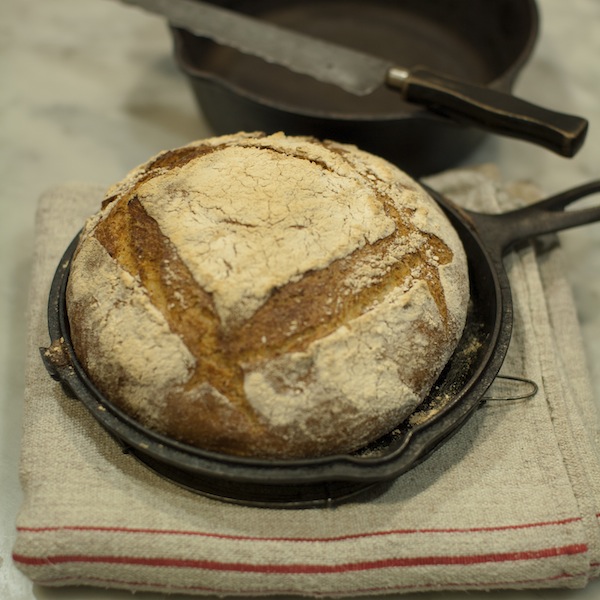
If you’re a proper breadhead, you’ve probably taken a stab at Jim Lahey’s no-knead bread by now. It seems like every baker has their own rendition of this simple recipe, but ours stands out from the crowd with its extra dimension of flavor and texture from stone-ground flour. Agave nectar lends a subtle sweetness and rich color, making this loaf a beautiful addition to any meal. The best part of all? Time does most of the work for you. Start it in the morning and you’ll be wowing your dinner guests with freshly baked bread without breaking a sweat. It’s so good it happens to be Leslie’s favorite go-to bread recipe when she doesn’t have time to swing by the bakery. Now you have to try it!

The recipe below is meant to be baked in a standard dutch oven. Pick up our cookbook, More from Macrina, for modifications using a double dutch oven.

One-Day Artisan Whole Grain Loaf
Click here to print this recipe!

Ingredients

1 3/4 cups lukewarm filtered water (about 80°F)
2 tablespoons amber agave syrup
2 teaspoons active dry yeast
1 1/4 cups (5 1/2 ounces) unbleached all-purpose flour
1 cup (4 1/2 ounces) stone-ground whole wheat flour
1/2 cup (2 ounces) stone-ground rye flour
2 teaspoons kosher salt

Preparation
Makes One 9-Inch Round Loaf

1. Line a medium bowl with a clean cotton flour sack towel and sprinkle it heavily with flour. Set aside.

2. Combine the water and agave syrup in a large bowl. Sprinkle the yeast over the surface of the liquid and whisk gently until it has dissolved. Let the mixture sit for about 3 minutes to activate the yeast.

3. Add the flours and salt. Using a rubber spatula, mix the ingredients for 2 to 3 minutes by pulling the spatula through the dough and flipping it over to simulate a kneading motion. The dough will have no more flour pockets and will be quite wet. Cover the bowl with plastic wrap and let the dough rise for 2 hours at warm room temperature (75 to 80°F) or until the dough has doubled in size.

4. Lightly sprinkle the top of the dough with flour and do a baker’s turn. Cover the bowl with plastic wrap and let the dough rise again at room temperature for another 2 hours.

5. When the dough has risen, do a second baker’s turn. Again, cover the bowl with plastic wrap and let the dough rise at room temperature for another hour.

6. Transfer the dough onto a floured work surface and do a third baker’s turn – this time on your work surface rather than in the bowl. Invert the loaf so that it is seam side down, then cup your hands around the dough ball, resting the outer portion of your hands on the work surface. Move the ball in a circular motion to tighten it at the base. Invert the rounded loaf again and place it seam side up in the towel-lined bowl; lightly cover the top with the overhanging towel. Let it rise at room temperature until it is about 1 1/2 times its original size, about 1 hour. This dough should have a texture like Jell-O, slightly under-proofed. If it has risen too much at this stage, it will collapse when you place it in the dutch oven.

7. One hour before baking, preheat the oven to 450°F. Place the cast iron dutch oven and its lid inside to preheat. Flip the dough onto your floured work surface and slowly remove the cloth. With a sharp paring knife or razor blade, cut a 1/8-inch-deep, 4-inch square on the top of the dough. Using oven mitts, quickly retrieve the dutch oven and remove the lid. Gently drop the dough into the dutch oven, replace the lid and slide into the oven.

8. Bake for 30 minutes, then remove the lid. Continue baking until the loaf is deep brown and very crusty, about another 20 minutes.

9. Flip the loaf out onto a wire rack (the loaf should release easily from the pan) and let cool completely before cutting.

Flour 101: How to Work with Wet Dough

Want to make a ciabatta or baguette? You’re going to have to get your hands doughy. Working with wet dough takes practice and patience…and a little extra flour on your fingertips. This sticky stuff, if treated right, creates a golden-brown crust and cream colored crumb. But overwork it and your loaf will come out less than stellar. That’s because kneading and handling wet dough too much overdevelops the gluten (the part that gives your loaf shape and texture).

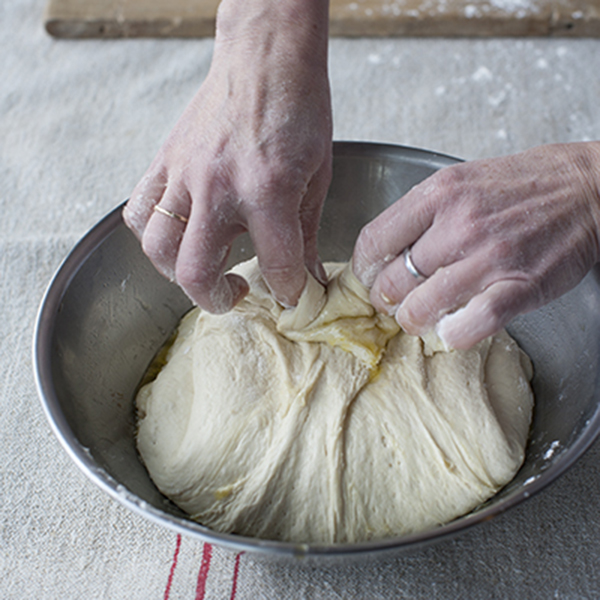
To produce the most beautiful, freshly baked loaf, knead wet dough gently in the beginning and then do what we breadheads call a “baker’s turn.”

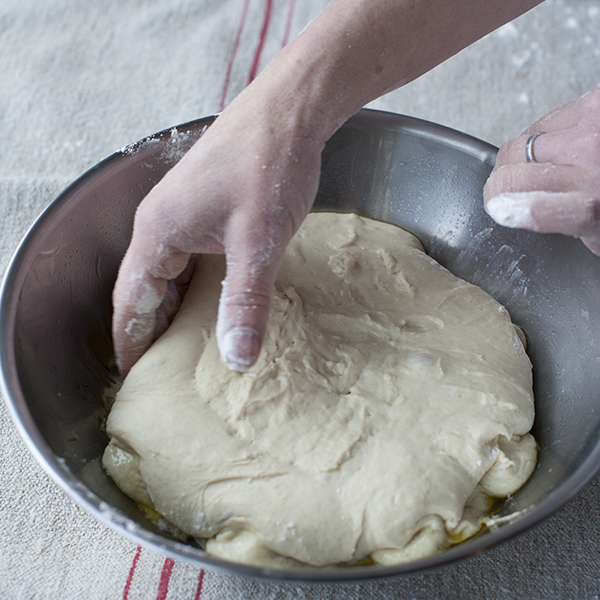
Step 1: Flour your hands well to prevent sticking to the dough. Keeping the dough in a bowl, use your fingertips to release the edges of the dough from the bowl.

Working with Wet Dough

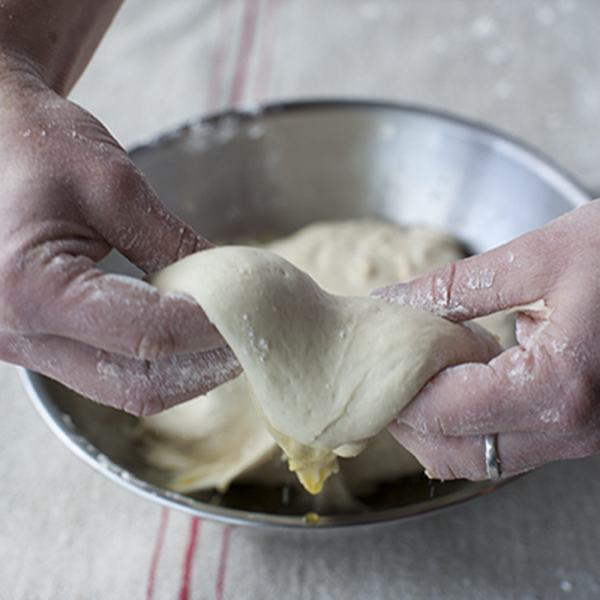
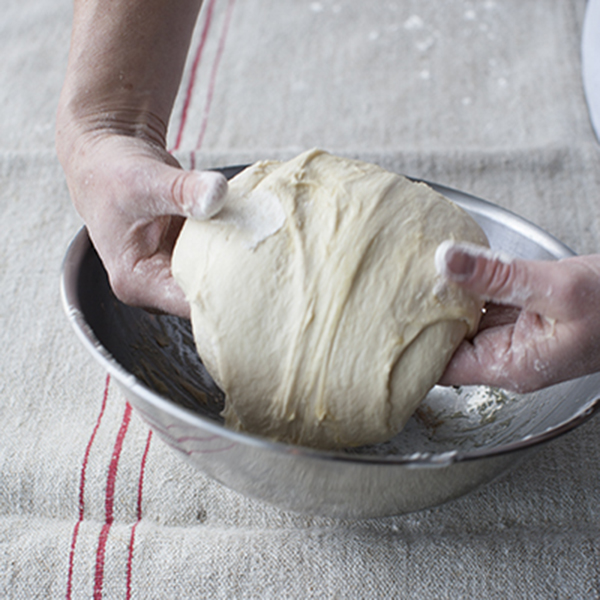
Step 2: Pull and stretch the right side of the dough outward, extending the dough past the rim of the bowl about six inches. Bring the stretched dough back to the center of the bowl and lay it on top of the dough ball.

Working with Wet Dough

Step 3: Repeat Step 2 with the left side as well as top and bottom portions of the dough, bringing the stretched dough back to the center each time.

Working with Wet Dough

Step 4: Flip the dough ball over, placing it seam side down in the bowl.

Working with Wet Dough

Now you’re ready to proceed according to your recipe’s instructions. Some recipes require several rounds of bakers turns after each resting period. This helps develop the gluten and give your loaf shape.

Check back next week when we’ll be making our One-Day Artisan Whole Grain Loaf using flour mentioned in our previous Flour 101 blog post and preparing our wet dough with using the baker’s turn technique.

Flour 101: A Few of Our Favorite Flours

National Flour Month

Let’s face it, without flour our bread racks would be bare, our pastry cases empty, and there would be a little less bounce in our steps. It’s a key ingredient in just about everything we make, so it’s only natural that we put a lot of consideration into the brands and types we use.

In honor of National Flour Month, we’re dipping into the fluffy world of flour with a little series taking you from grain to loaf. First up, let’s talk about our favorite flour suppliers and why Leslie selected each one.

Fairhaven Organic Flour Mill – More and more we are reaching for Fairhaven Mill’s flour for our products. The folks at Fairhaven strive to work with local farmers whenever possible, and as a result 70 percent of the grain used in their flour is grown right here in Washington. The whole-grain milled flour that we get from Fairhaven is made with grain grown on the Williams Brothers’ farm in Walla Walla. Milling the grain completely intact preserves its nutrition and natural sweetness. That exceptional flavor and texture really shines through in our Vollkorn, Pane Francese, Greek Olive and Raisin Pumpernickel to name just a few.

Cook Natural Products – Leslie chooses Cook’s identity-preserved wheat flour, because it creates a very flavorful bread. Identity-preserved grain is never mingled with other grains nor is it ever modified, so bakers know exactly what to expect with quality and flavor. This fine ingredient is one of the reasons our signature Baguette is so delicious.

Shepherd’s Grain – Shepherd’s Grain flour is a favorite staple among many local bakers. Recognizing the benefits of sustainable agriculture, this brand sources grain from family farms built with those practices in mind. Their growers use no-till and direct seed farming to conserve soil, prevent erosion and increase fertility. You’ll find Shepherd’s Grain Low-Gluten Strength Flour in our Mrs. D’s Vegan Cookie.

As simple an ingredient as flour may be, sourcing the best not only impacts the food we make, it affects our environment and farmers too. You can find more information on the flour we use as well as recipes for many of our artisan breads in our More from Macrina cookbook.

Now that we have the basics covered, check back next week when we’ll get into the nitty gritty of working with wet dough!

Mustard and Co.: Just Plain Good

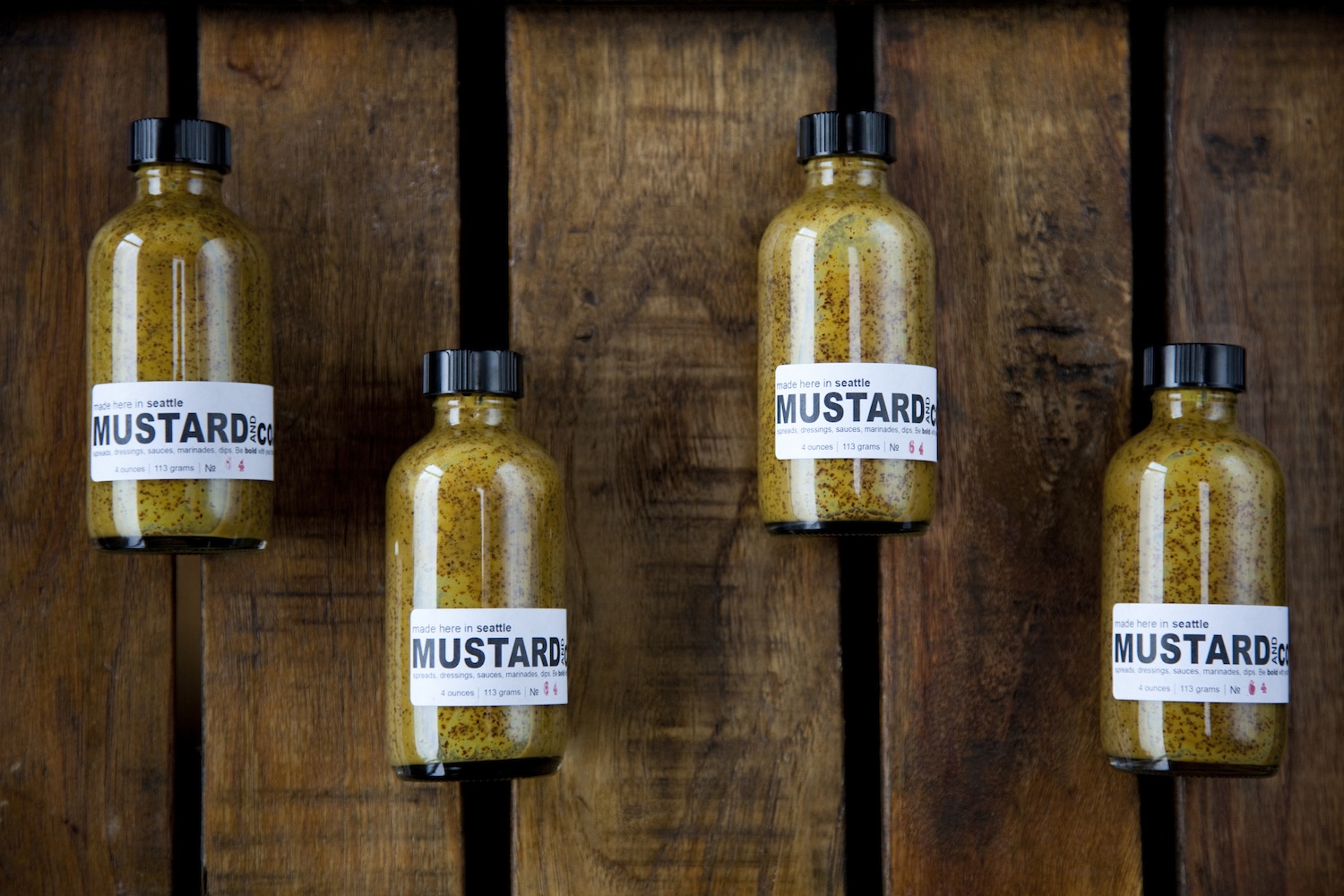
Mustard and Co.

Photo courtesy of Mustard and Co.

It seems like most people don’t give mustard much thought. Its section in the condiment aisle is dwarfed by towers of mayonnaise, ketchup, barbecue sauce and an alarming array of hot sauce. That bright yellow bottle is familiar, but what’s in it?

That’s what Justin Hoffman wondered as he scanned the list of ingredients on a jar of mustard at a deli one day. As his eyes fell on the words “white vinegar,” he was hit with what he calls “divine inspiration.”

“It struck me as cheap and bland,” Justin remembers. “And at that moment I decided I was going to make a honey mustard using balsamic vinegar, which I saw as a more complex and tasteful option. It’s since been quite an unexpected journey. It’s like a child dropped into my arms, for which I must now care.”

That child is Mustard and Co., a swiftly up-and-coming condiment business that he formed last year with his friend and business partner Bryan Mitchiner. Justin spent the last few years tweaking his recipe. Only a handful of ingredients go into his mustard, but he’s dutifully sought out the best. Unlike most mustards, Mustard and Co.’s is never subjected to heat, resulting in a curiously spicy kick that’s balanced with a bit of curry and raw honey.

Bryan dropped off a bottle of their signature blend at Macrina not long ago for us to consider selling in our cafés. It didn’t take much more than a taste to convince us.

“They are exactly the kind of local company that we would like to support,” says Crystal Kitchin, general manager of cafés. “They are very nice and their product is all-natural, which pairs nicely with our bread.”

Not only can you find Mustard and Co. on our shelves these days, but Head Savory Chef Elizabeth Hall has been folding it into our lunch menu. It was practically made for our Pretzel Roll.

Justin’s favorite way to eat it? “Put a little chèvre on a cracker, top it with a piece of smoked salmon and a drizzle of mustard and it will take you to a new place.  I also love it in potato, tuna or egg salad mixed with a bit of mayo, or aioli if that’s your preference.”

Mustard Aioli
Click here to print this recipe!

Ingredients

1 large egg yolk
1/2 teaspoon finely chopped garlic
1 1/2 teaspoons freshly squeezed lemon juice
*1 tablespoon plus 1 teaspoon Mustard and Co. mustard
1/2 cup canola oil

*Available in our cafés or online.

Instructions

1. Whisk the egg yolk, garlic, lemon juice and mustard in a medium bowl to thoroughly combine.

2. Start adding the canola oil just a few drops at a time, whisking constantly until the mixture begins to emulsify. As it thickens, continue adding the oil in a slow stream, making sure each addition is thoroughly blended before adding more.

3. Season to taste with salt, then cover the aioli and refrigerate until needed.

4. Enjoy spread on a corned beef sandwich or as a dip with a soft pretzel.

The Seattle Wine and Food Experience

The Seattle Wine and Food Experience

We are gearing up for the food event of the year! No, Thanksgiving hasn’t been moved to February. If you’ve ever wondered where exactly your food and beverages come from, The Seattle Wine and Food Experience (SWFE) is a can’t-miss event. In its sixth year, SWFE is a gathering of the Northwest’s best purveyors of food and drink all ready to sample their products and talk about their origins.

“What makes Seattle Wine and Food Experience unique in the marketplace are the experiences guests encounter,” says Jamie Peha, producer of SWFE.

Those “experiences” Jamie’s talking about?

Stop by our booth in Les Dames d’Escoffier Alley to sample our newly created Rye Crostini – not yet available in our cafés – piled with savory layers of corned beef, Manchego cheese, pickled onion and cabbage slaw.

Les Dames d’Escoffier Seattle, this year’s event beneficiary, is a wonderful non-profit organization of women leaders in the culinary world whose focus is on raising scholarship funds for women in the food, beverage and hospitality industries, while also supporting community outreach and local sustainable-agriculture projects. As a member of Les Dames, this year’s SWFE comes full circle for Leslie, making it all the more exciting.

Visit SWFE online for more event details and ticket information.

Valentine’s Day at Macrina

Valentine's Day 2014

Despite the love surrounding Valentine’s Day, this holiday can be rather divisive. Those not partnered up have even created the antithesis, dubbing it Singles Awareness Day. Whether you love it or hate it, we can all agree that February 14 gets one thing right: Food. Seeing to it that no one misses out, we’ve pulled together some delicious sweets and savories to share with your favorite people or keep all to yourself.

1. Potted Cheese – We top a blend of chèvre, cream cheese and Manchego with a relish of roasted beets, raspberries, Champagne vinegar and spices. Couple it with our Sardinian Flatbread or Crostini for an elegant appetizer or party snack.

2. Raspberry Pocket Pie – Our signature pie crust is wrapped around fresh raspberries and raspberry preserves, then topped with crystal sugar. Slip one into your youngster’s lunchbox or bring some to the office to share.

3. Mini Chocolate Orange Coffee Cake – If there was ever an excuse to have chocolate for breakfast, it’s Valentine’s Day. This coffee cake is laced with flavors of orange, bittersweet chocolate and roasted almonds and topped with rich chocolate ganache.

4. Fresh Strawberry Tartlet – This tartlet comes dressed in Cupid’s favorite colors, filled with sweetened strawberries and topped with white chocolate curls.

5. Heart Galette – Want to skip the mad scramble for Valentine’s Day dinner reservations? Treat your favorite person to a Valentine’s Day brunch instead! Filled with ricotta and chèvre and topped with a roasted beet relish, we make this savory pastry easy to reheat and serve.

6. Infinity Cake – Enough to satisfy four, this cake is the perfect dessert for those double-dating this Valentine’s Day. We fill our white chocolate almond cake with raspberry amaretto Bavarian cream and fresh strawberries, then finish it with white chocolate sour cream frosting, a fresh raspberry and sugared rose petal.

You can find these items along with many more Valentine’s Day treats in all of our cafés through Sunday, February 16.

Glazed to Perfection: How to Make Chocolate Ganache

Chocolate Orange Coffee Cake glazed with chocolate ganache

Our Mini Chocolate Orange Coffee Cake drizzled with rich chocolate ganache.

Chocolate ganache is rainbow sprinkle frosting all grown up. It’s patent leather shoes and sequin sparkles. It’s velvety smooth and seductive. Go ahead. We dare you to whip up an easy batch and not dip a finger into the decadent gloss.

We use chocolate ganache in many of our recipes, from Cocoa Puffs to Chocolate Orange Coffee Cake. Since it brings a full-bodied thrum of chocolate flavor to everything it touches – and you can’t have Valentine’s Day without chocolate – we decided to share our signature chocolate ganache recipe.

Chocolate Ganache
Click here to print this recipe!

Ingredients

1/2 cup heavy cream
1 cup good-quality semisweet chocolate chips

Instructions

Pour the heavy cream into a small saucepan and place over medium heat. Bring the cream to a froth just before it boils. Turn off the heat and add the chocolate chips. Using a rubber spatula, stir constantly until the chocolate has completely melted. Set the pan aside and let the ganache cool to the desired consistency. The ganache will thicken as it cools.

How to Use Chocolate Ganache

  • Pour warm ganache over ice cream for an off-the-charts delicious sundae.
  • Dip your favorite fruits (dried or fresh), nuts (raw or roasted) and candies.
  • Drizzle warm ganache over a bundt cake for a dramatic effect that’s impossible to mess up.
  • Top cupcakes in lieu of traditional frosting.
  • Spread a layer over a pan of brownies for death-by-chocolate decadence.