On view at MOHAI through September 10, 2017
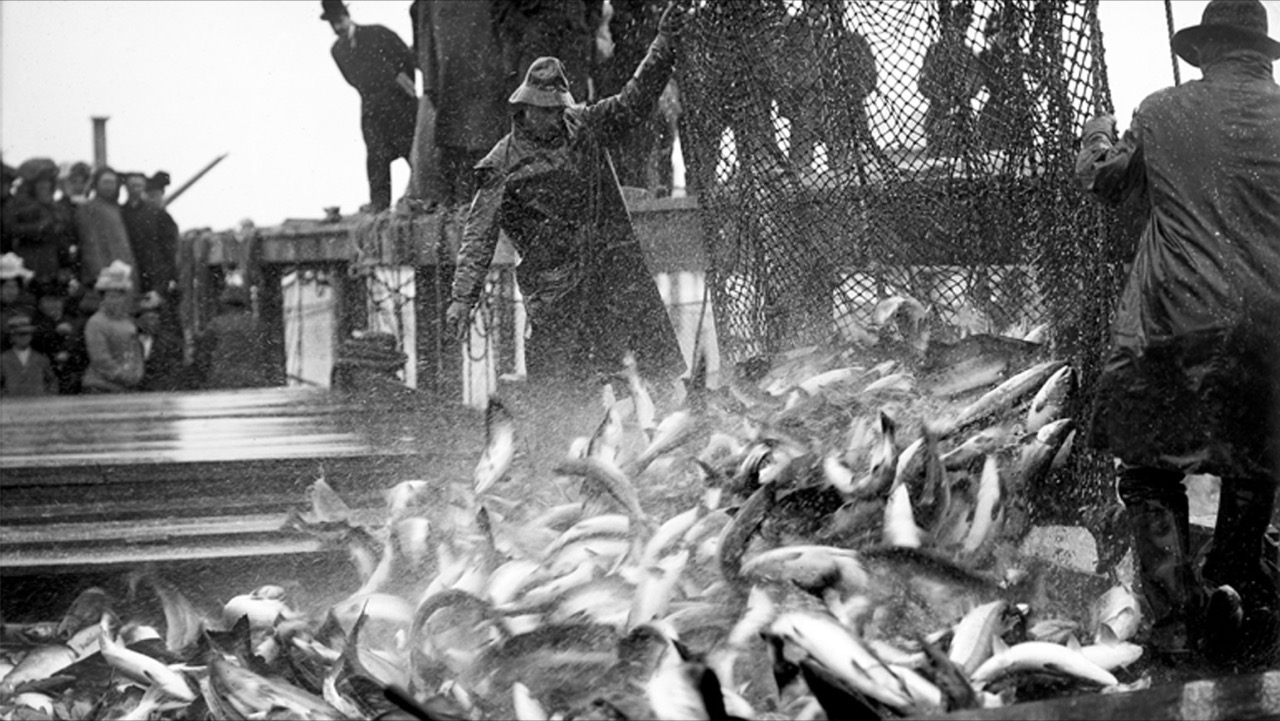
(Photo courtesy of MOHAI)
There may be no better way to know a city than by the way its people eat. Seattle’s Museum of History & Industry (MOHAI) currently has a beautiful new exhibit, Edible City: A Delicious Journey, which explores Seattle’s culinary history over the last two centuries. You journey across shorelines that provided abundant seafood to Native Americans in this area and trace the influences of Pacific Rim nations on signature dishes in four-star restaurants. If you haven’t already seen it, put it on your calendar. You’ll appreciate this place we call home all the more.
The exhibit, which runs through September 10, 2017, was curated by two-time James Beard Award-winning food writer Rebekah Denn. An exhaustive researcher, she writes beautifully. Enthralled by the exhibit, we recently asked her some questions to learn more.
Leslie
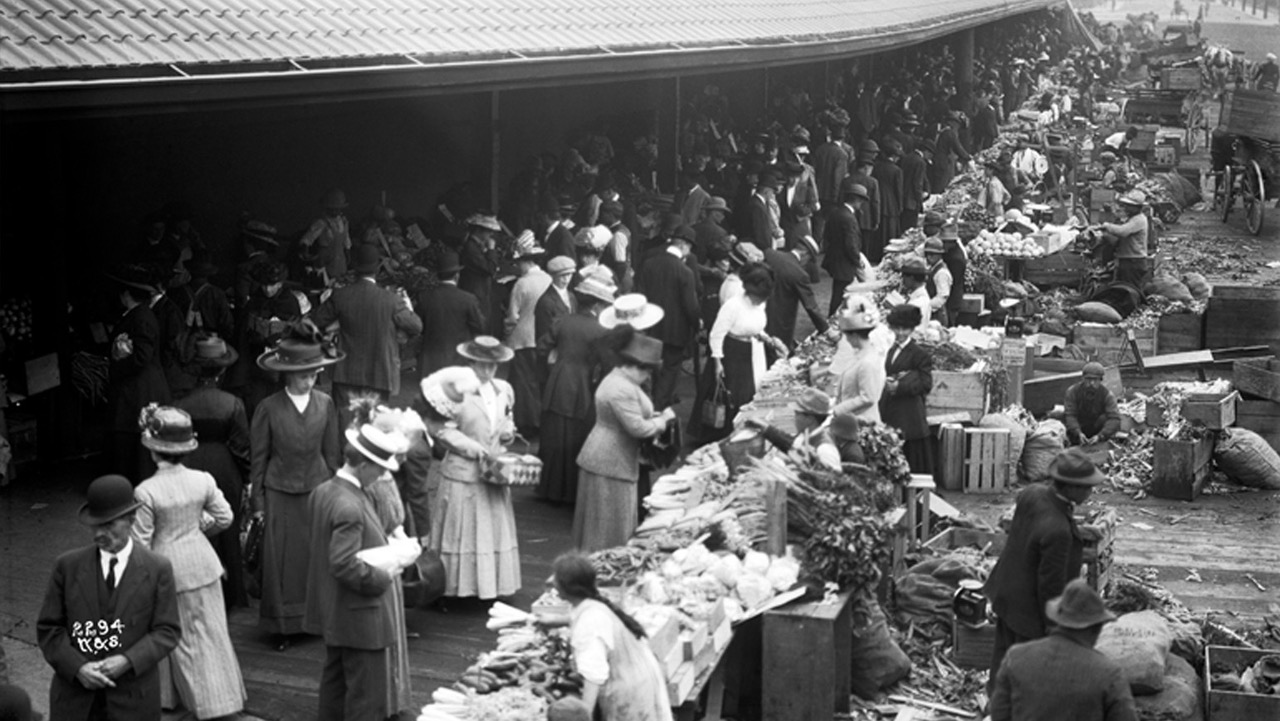
(Photo courtesy of MOHAI)
How did you get involved in the project?
RD: MOHAI first contacted me in October of 2014 to see if I had ideas for how to tell the story, so I’ve been working on it on and off for two years.
What came first: the idea for the book or the exhibit?
RD: The exhibit idea definitely came before the book! But we ultimately wanted a way to preserve some of the exhibit and expand on the stories.
When I first met with the MOHAI staff, they asked me if I had any questions about doing the exhibit. I said, “What’s my biggest problem going to be?” One of the designers said, “You won’t have room for everything you want to say.” That was so true, but the book helped get at least some more of the information out there, and some of the really striking photos from MOHAI’s archives. We also got to include some recipes that we think of as Seattle signatures, and artist Julie Notarianni illustrated them for us.
In your research, what are a few things that surprised you?
RD: a. How many times what is old becomes new again. There’s a 1927 letter I love from Pike Place Market warning a vendor against selling spinach from California when local spinach is available (they threaten to confiscate his spinach!). Similarly, back in the 1940s, Angelo Pellegrini was encouraging Seattleites to eat fresh, local, seasonal foods — his writings are absolutely on-point for modern diners. You could also slip some of the menus from oyster bars 100 years ago into a modern restaurant without anyone noticing (except maybe the price list.)
b. How it seems that people have always wanted to find a way to stay in Seattle once they got here, and how prescient some observers were about what Seattle’s food scene would become. Actually, let me quote you a paragraph from the catalog about the Boeing bust years (which in turn quotes Roger Sale): “Given the flagging economy, it might have seemed an odd time for a restaurant renaissance, yet food provided an entry point into business for job-seekers who didn’t want to leave their beloved hometown. Restaurants were perhaps the best example, wrote historian Roger Sale, of a new consumer culture where it seemed everyone laid off from Boeing wanted to turn a lathe or cook an omelet. Young workers and female entrepreneurs entered the field, attracted by small-scale projects that weren’t beholden to banks and didn’t require a corporate slog to the top. “Cheeses, wines and coffees Seattle had never heard of became available,” Sale wrote. It was possible, he presciently suggested in 1976, that this rush of activity could push the city into an era of culinary greatness.”
c. I’ve written about food in Seattle for well over a decade, and I learned so much that I hadn’t known… like the story of the huge Crescent spice company that was based here (now part of McCormick), producers of Mapleine, a hugely popular imitation maple flavoring. Or how every era seemed to have its own version of our Tom Douglas. Again, from the catalog: “In the ‘20s and ‘30s the name Clare Colegrove was “associated with good eating in Seattle,” by one account, with alliterative eateries like the Purple Pup. Walter Clark, known as the dean of Seattle restaurateurs, owned an astonishing 55 restaurants between 1930 and 1970 (including the iconic Twin Teepees), according to old-Seattle expert Clark Humphrey. A critic once wrote that it was unlikely anyone in Seattle had not heard of Clark’s restaurants. A few decades later, it was unlikely that anyone had.”
What primary sources did you rely on for foods and restaurants for Seattle’s early history?
RB: I spent some time in MOHAI’s archives and found some fabulous materials (menus… matchbooks…photographs…cookbooks…the sign from the original Manca’s and the equipment from the Sagamiya bakery!) The museum staff members and public historian emeritus Lorraine McConaghy were also invaluable in helping track down material, from ancient newspaper advertisements to a still-working farm machine used to make berry-picking boxes. Nancy Leson let me raid her archives and interview notes from her decades covering the Seattle restaurant scene. People and institutions were unbelievably generous. Angelo Pellegrini’s children shared stories of their dad and agreed to loan us family treasures. Bob Kramer invited us to tour his workshop and see how he forges his world-famous knives. Jerilyn Brusseau and Greg Komen loaned us original Cinnabon items, including their cinnamon tasting notes from the Restaurants Unlimited Inc. kitchen. Jon Rowley brought us letters from Julia Child (they had a running correspondence on salmon and on peaches, among other subjects.) The Seattle Public Library let us borrow items from the library’s Pike Place Market collection, including a grand old ledger book from the wartime years and buttons from the Save the Market campaign. (Speaking of SPL, their online archives are an amazing resource. When we had questions like “When was Maison Blanc destroyed in a fire?” the library website let us simply search Seattle Times archives from 1895 onward from our desks. (The answer: It was front page news on April 30, 1960.) The owner of the Monorail Espresso cart delayed her own plans for the cart so that we could include it in our displays. “Starbucks Melody,” the blogger, brought over pieces from her personal collection like bottles of “Mazagran,” the company’s first bottled beverage. Mario Batali gave us permission to use a video of his grandmother Leonetta making ravioli… and then, when we visited Armandino Batali and his daughter Gina at Salumi, they loaned us a Merlino olive oil tin that was the “Leonetta” brand, also named for her (Armandino’s grandparents founded the Merlino company.) Serendipity! And the people who are a part of Seattle’s modern food history shared their expertise (including Matt Galvin, who served on the advisory committee) and their stories. The founders of the Beacon Food Forest sent over the original maps for the project; Seattle Neighborhood Farmers Markets dropped off the bells that they ring to open and close the market. Allrecipes staff members did Seattle-based recipe searches for us. The thank you list could go on for pages.
(Photo courtesy of MOHAI)


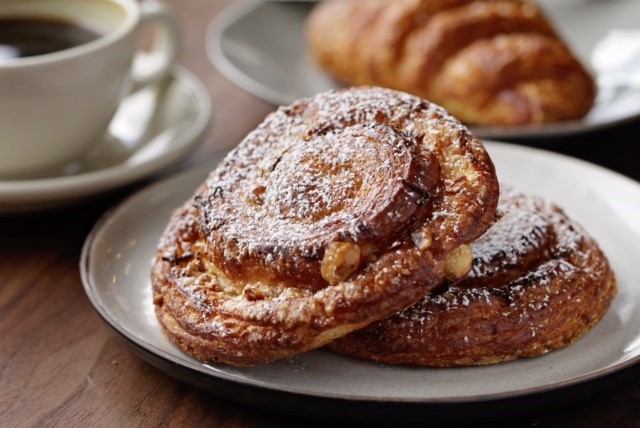
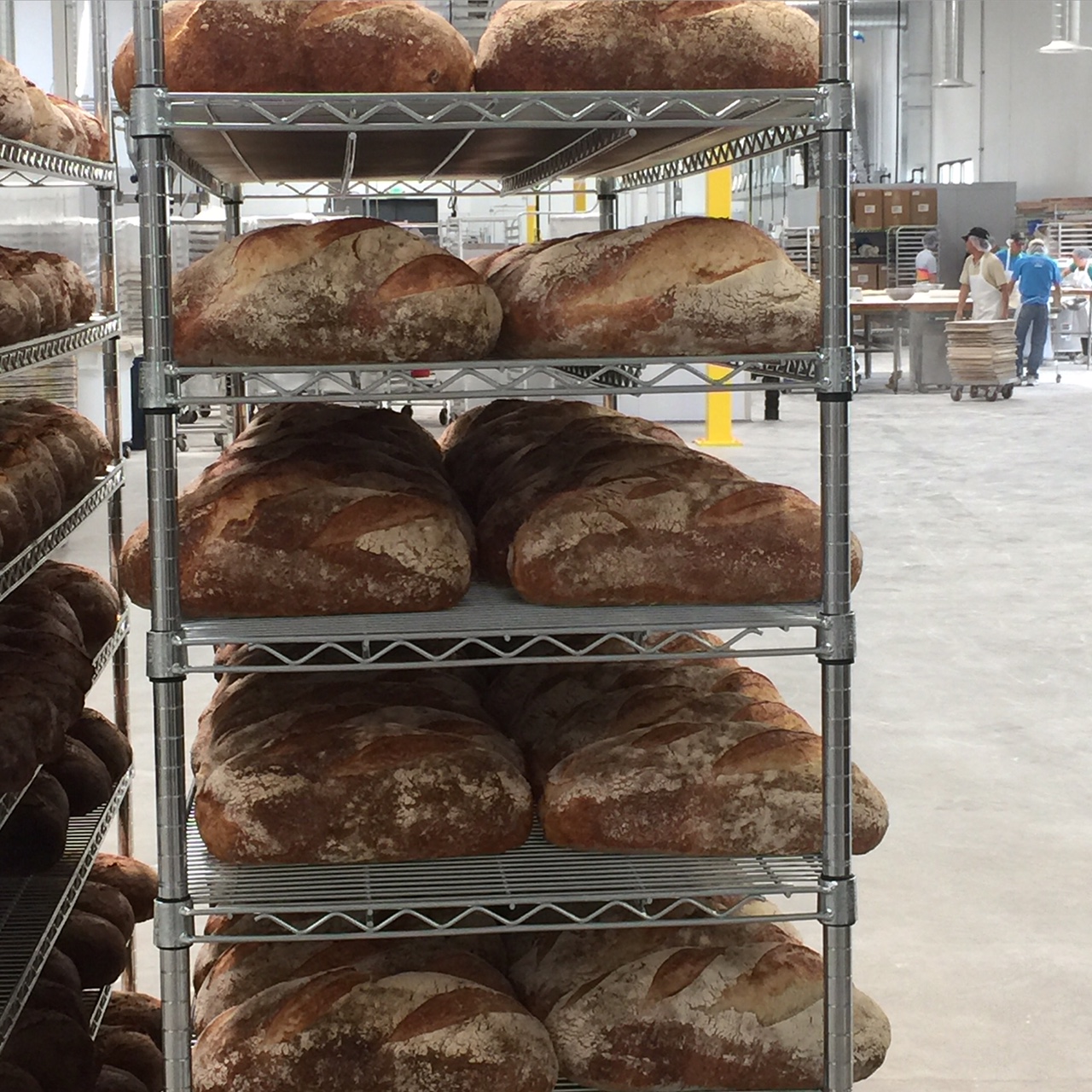
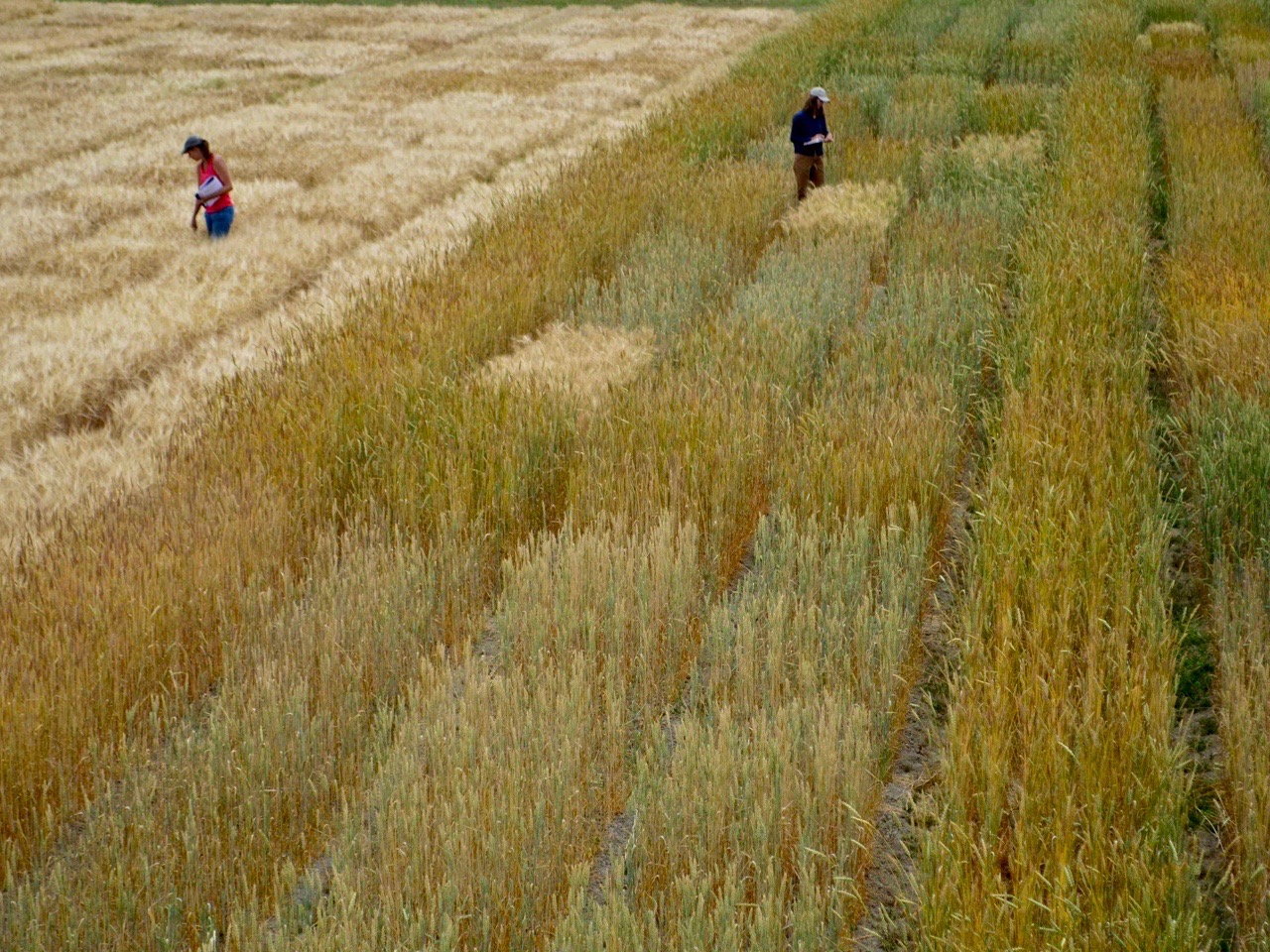 The flour most of us are familiar with—the inert, white powdery stuff from the supermarket with a long shelf life—is a very modern development in our long relationship with wheat, the most important food in history. Before industrial agriculture became dominant, milling was done at regional mills with diverse strains of wheat. The effort to create uniform flours that won’t spoil has taken much of the flavor and nutrition from our flour and the products made with it.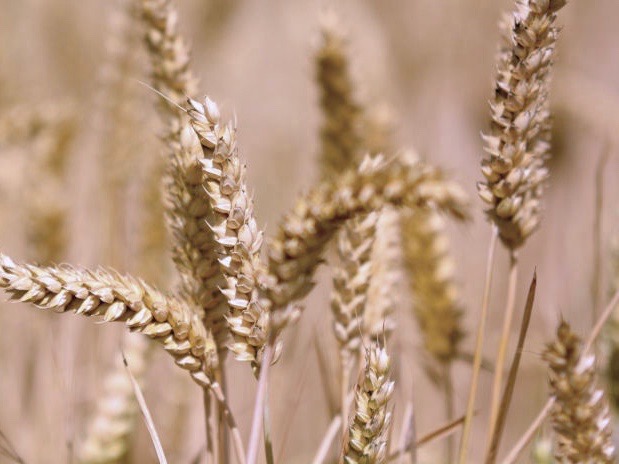
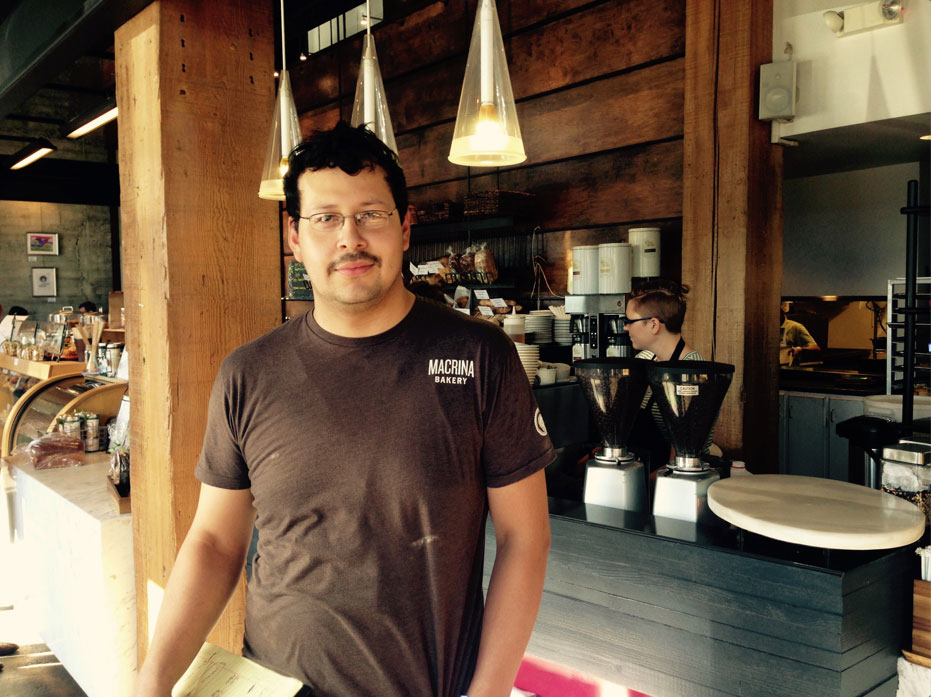
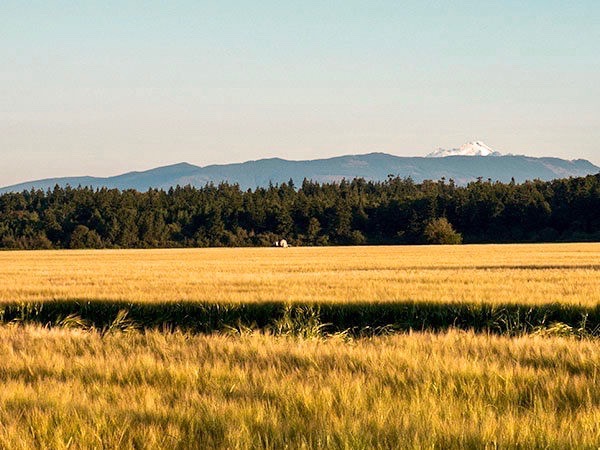 Every year The Bread Lab hosts an annual conference called Grain Gathering. Professional bakers, bread enthusiasts, brewers, farmers, and chefs from around the country descend on the Skagit Valley. Workshops, panel discussions, and demonstrations cover a range of wheat-centered topics (I’ve learned lots from these over the years). At the 2015 event, they held a bread tasting for a group of experienced bakers. We tasted seven breads, each made with a different locally grown wheat. For each loaf the recipe was essentially the same, with small adaptations made to create the best loaf with each flour. The varying tastes, textures, and the overall natural sweetness was a revelation. The flour made all the difference. The experience inspired my commitment to bringing more locally grown flours to the breads we make at Macrina.