Monorail Espresso: The Seattle Legend Has Built Its Reputation Cup by Cup  

What is it about a coffee ritual that makes it so central to a good day? First, there’s the coffee: freshly roasted premium beans blended just right. Then there’s the preparation, a skill that can take months to master. And as important as anything: standout customer service. This is the essence of Monorail Espresso.

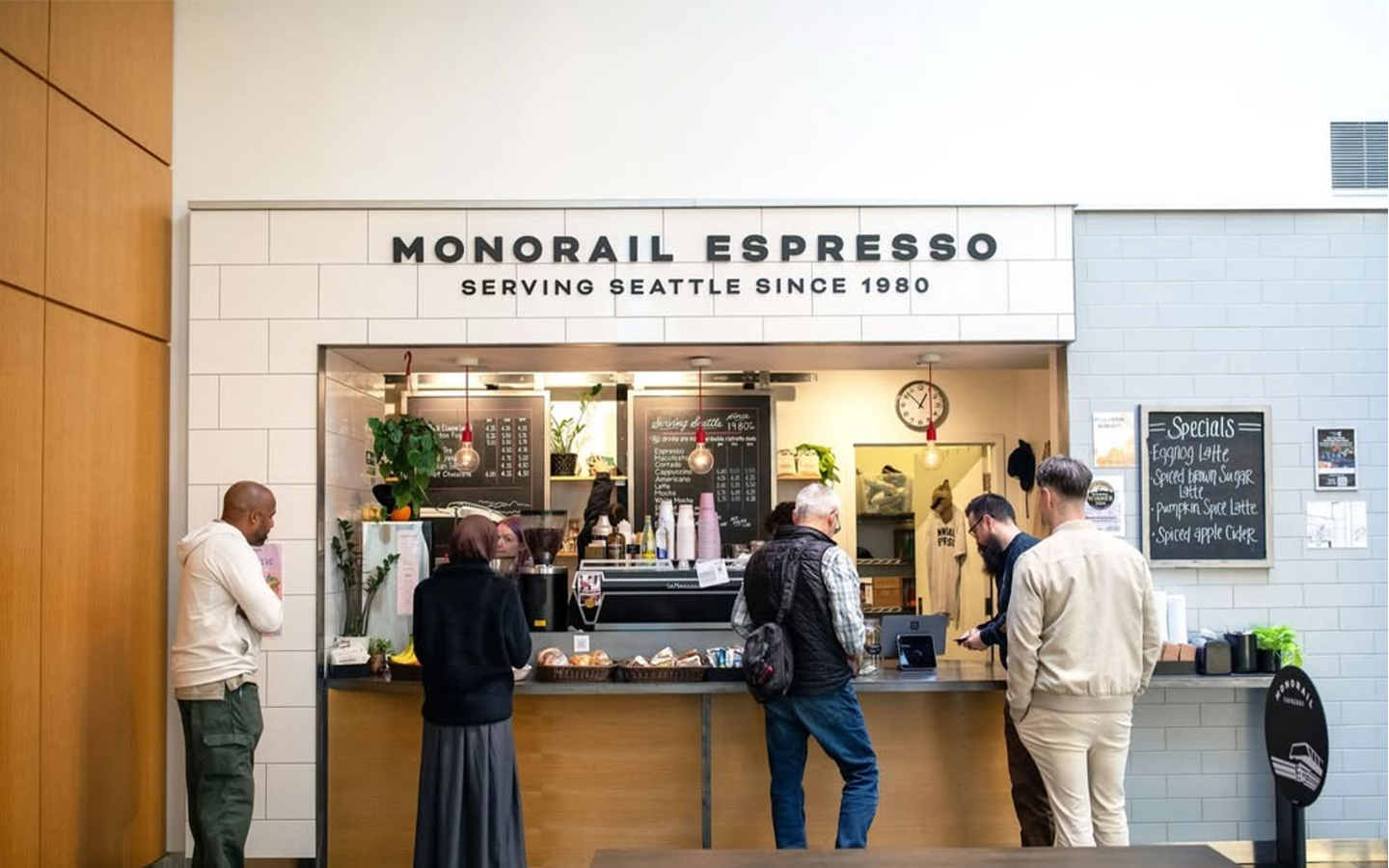
The espresso cart is now ubiquitous across America, but it started here, in Seattle, with Monorail Espresso. On December 1, 1980, Chuck and Susie Beek began serving espresso from a cart under Seattle’s Monorail, two years before Howard Schultz joined Starbucks. The cart itself was built by Kent Bakke and John Blackwell of La Marzocco, a pioneer in bringing high-quality espresso machines to America. They wanted espresso in the street, modeled on the quick espresso kiosks at Italian train stations. They bought a utility cart from the Boeing surplus yard, rebuilt it to hold an espresso machine, and created what would become the original espresso cart for Monorail Espresso. Early commuters lined up for strong, ristretto-style coffee, and the cart’s speed, quality, and personality sparked a downtown phenomenon. By the mid-‘90s, espresso carts were everywhere, following the path Monorail created. 
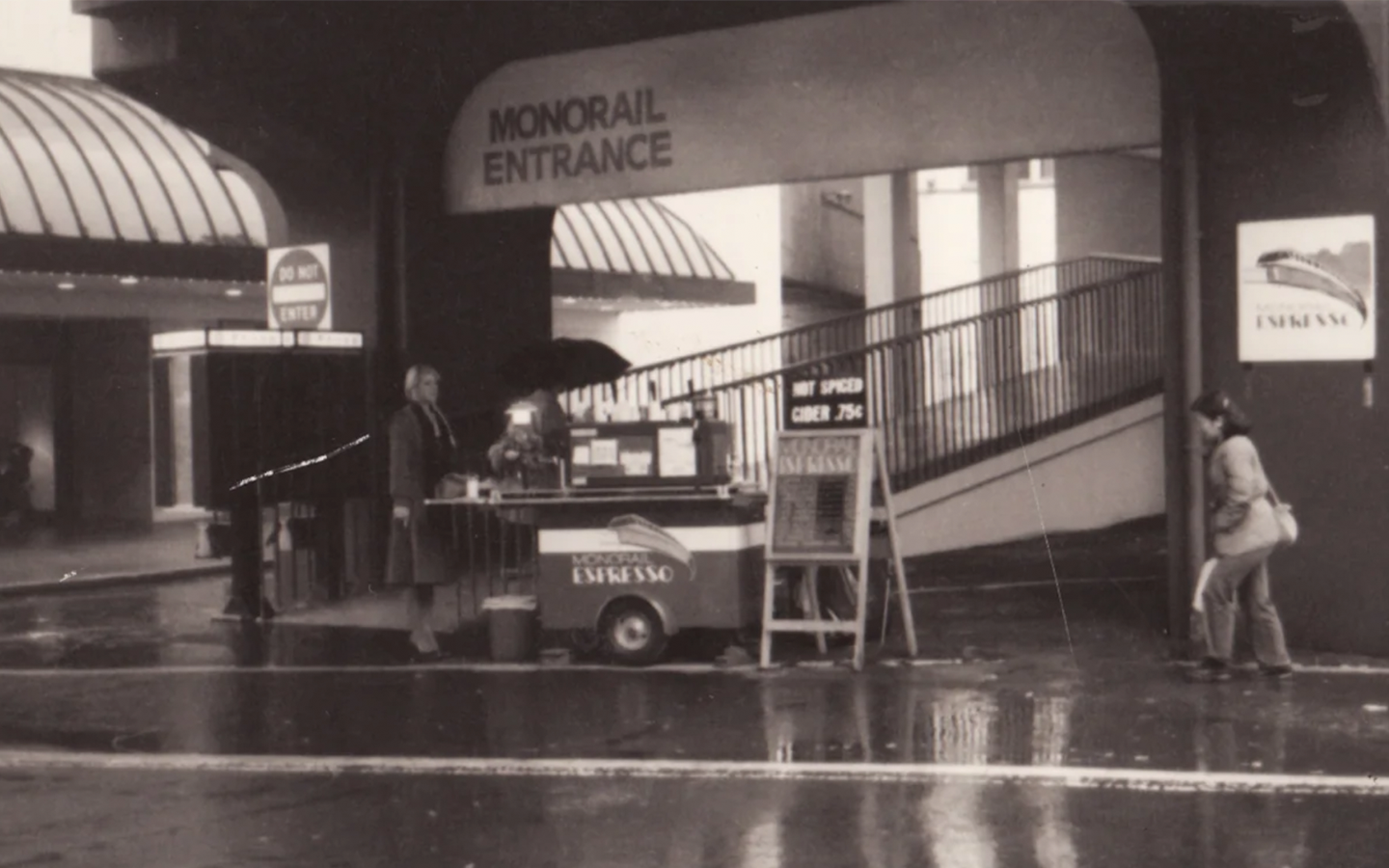
Unlike many firsts, Monorail has continued to build on what it started, nurturing its reputation for serving the city’s best coffee. As downtown changed, Monorail adapted. Rising permit costs and shifting construction patterns pushed the cart from one spot to another. In June of 1995, Monorail converted from cart to the present walk-up window on Pike, a format central to its identity: direct, fast, friendly, and unmistakably urban. 

After 32 years at the helm, Chuck Beek handed Monorail to someone who already knew the rhythm of the window — Aimee Peck, who joined the team in 2008 as a barista, rose into management, and bought the business in 2012. Under Aimee, Monorail has grown to a handful of downtown sidewalk cafés that echo the original: small, streetwise, and built for speed and skill — Columbia Center (2015), Westlake in the Denny Triangle (2018), 4th Avenue (2022), and most recently, Pine Street inside the Seattle Convention Center Summit building.  
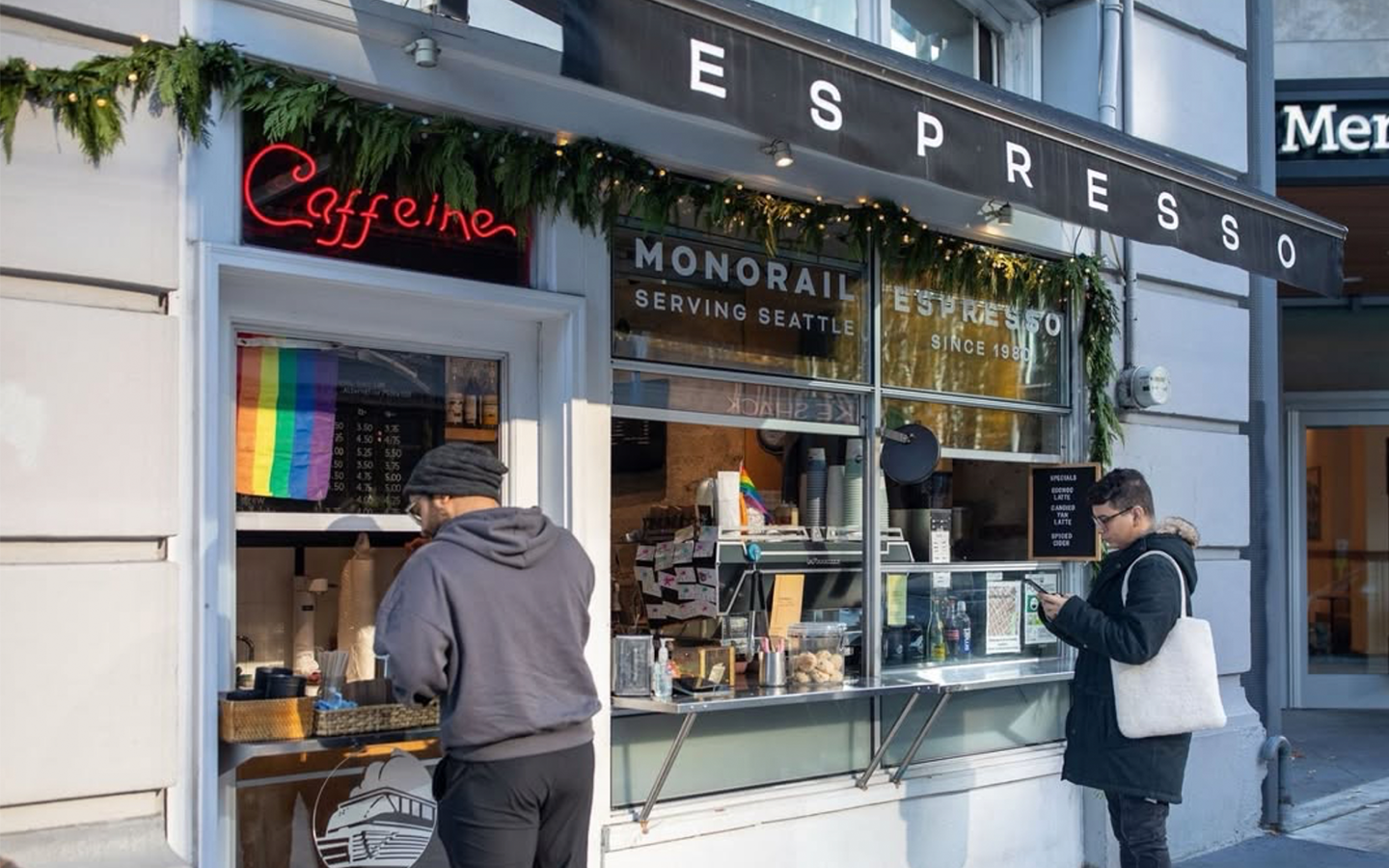
“There are a lot of new people in Seattle,” Aimee says, and her mission has been to keep a landmark alive as the city changes. “We are kind of very iconic… my mission this entire time is to just keep this iconic business alive.” 

Monorail roasts its own coffee and has used the same espresso blend since the late ‘80s. “We don’t follow fads,” Aimee says. The shops are intentionally small — walk-up windows built for speed and focus — so Monorail keeps the menu tight and the standards high. 

The coffee is only half the equation. “Obviously, the coffee is really good,” Aimee says, “but how the baristas prepare it is essential. You can take a beautiful coffee and ruin it easily.” Training is rigorous, quality checks are constant, and the expectation is simple: “Our ethos is basically good quality espresso and great customer service.” 
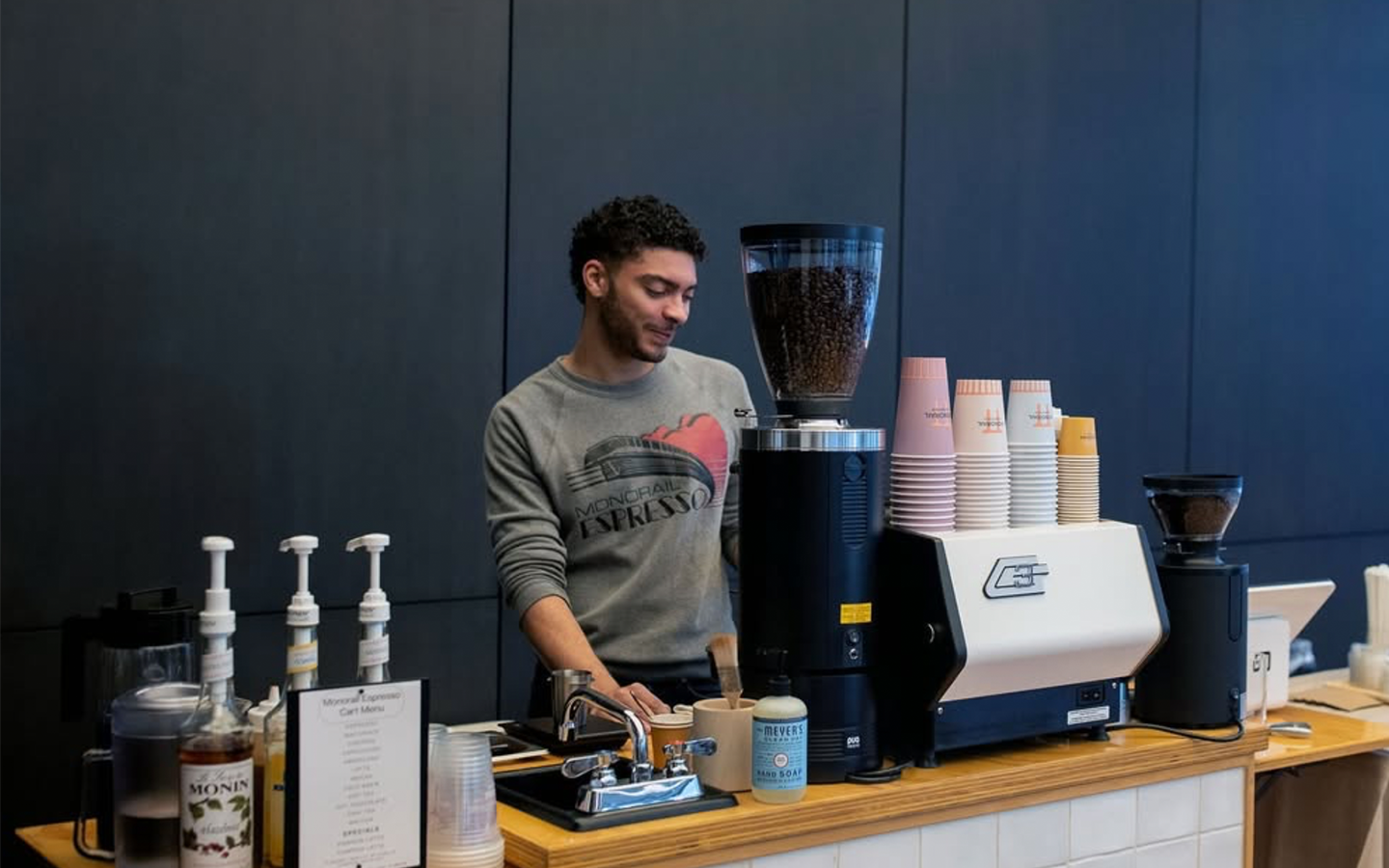
That same clarity shows up in Monorail’s culture. Employee tenure is extraordinary. Investing in the team is part of the ethic: manager retreats have included trips to the La Marzocco factory in Italy and visits to the Costa Rican farms that supply some of its coffee beans. 

And while coffee is the center of gravity, the experience extends beyond the cup. For years, Monorail has paired its espresso with Macrina baked goods, a partnership Aimee describes in the same terms she uses for Monorail: dependable and uncompromising. “We love Macrina products,” she says. “The quality is super consistent… and you guys show up every day, week in and week out.” 
Could This Be the Busiest Café in Washington?

Inside Sea-Tac’s 24/7 Dilettante Mocha Café, where 1,500 daily customers, a choose-your-cocoa “Chocolate Scale,” and a veteran crew keep the Central Terminal buzzing.

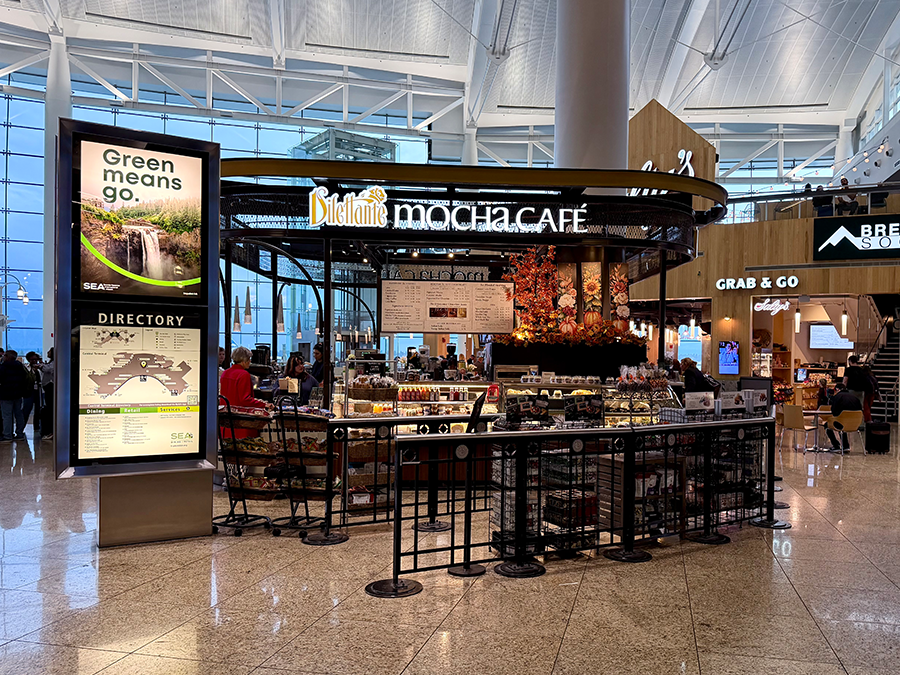
By 4 a.m., the Dilettante Mocha Café in Sea-Tac’s Central Terminal is already humming. The line moves briskly as red-eye travelers and airport staff grab a quick breakfast and a caffeine boost. Steam wands hiss, and the morning crew of eight sees to it that their signature chocolate-forward mochas, all manner of coffee-based drinks, breakfast sandwiches and pastries come out quickly. If you’re racing the clock, there are grab-and-go items including hot-case breakfast sandwiches, Macrina pastries, and drip or cold brew at the register.

With renovations in 2019 and 2023 complete, the Central Terminal has become the airport’s beating heart. In 2024, a record 52 million passengers traveled through Sea-Tac, the bulk of them passing through the bright, soaring space. Dilettante’s Mocha Café is situated in the middle of it all, open 24 hours, seven days a week, an oasis for those seeking sustenance and gift boxes of chocolates and other indulgent treats. 

Debra Tyner, the general manager who oversees the cafés, has been with Dilettante for ten years. The Central Terminal is her home base. “It’s a 24-hour café, so I’m pretty much on call all the time,” she says. Good, experienced baristas are key to the café’s success, from quality to customer experience. Many baristas have been working at the café for years. In fact, Debra’s first hire is still there nine years later. 

Founded in 1976 by third-generation chocolatier Dana Davenport, and rooted in family craft that reaches back to 1898, the original Capitol Hill “The Dilettante” evolved from a chocolatier and late-night dessert temple into today’s Mocha Café. Debra says, “Chocolate is still at the heart of what we do. The Mocha Café combines both: our chocolate heritage and coffee culture. When you walk through the airport, we’re the only café offering a chocolate scale where you can choose your mocha’s flavor intensity. We offer a range, from white to milk to dark, plus our signature Ephemere chocolate and an extra-dark option. You’re not just ordering a mocha, you’re designing it around your preferred richness or sweetness.” Alongside the drinks, travelers pick up boxed truffles—salted caramels, raspberry and espresso truffles, nut clusters, toasted-coconut haystacks. Dark chocolate mousse cups are the top-selling dessert.

Macrina drops off fresh-from-the-oven pastries and cookies at 3 a.m., just before the rush. By 10 or 11, they’re usually gone. Beyond coffee—drip, cold brew, lattes, cappuccinos, and the famous mochas—you’ll find breakfast sandwiches and burritos, bagels, and a small lunch menu of turkey, ham, or chicken salad sandwiches. Simple salads (Caesar or arugula-pear), deviled eggs, snack packs, and cold-pressed juices round things out. For dessert, the case tempts with Midnight Mousse Cake, carrot cake, brownies, macaroons, and more Macrina cookies.

On a recent visit, the line moved quickly. Guests in a hurry were steered to drip coffee and grab-and-go items. Those after something more personal waited a moment longer for custom drinks. Despite the volume, the drinks arrived quickly, with the sort of velvety foam that only comes from the hand of an experienced barista. 

Busiest in the state? There’s no centralized database, but it seems plausible: a café in the center of Sea-Tac’s Central Terminal, open around the clock, serving a community that never really sleeps. People stream past with carry-ons, pausing for something warm and good before the next gate call. As Debra said, “You’d be surprised how many people order coffee at two in the morning.”

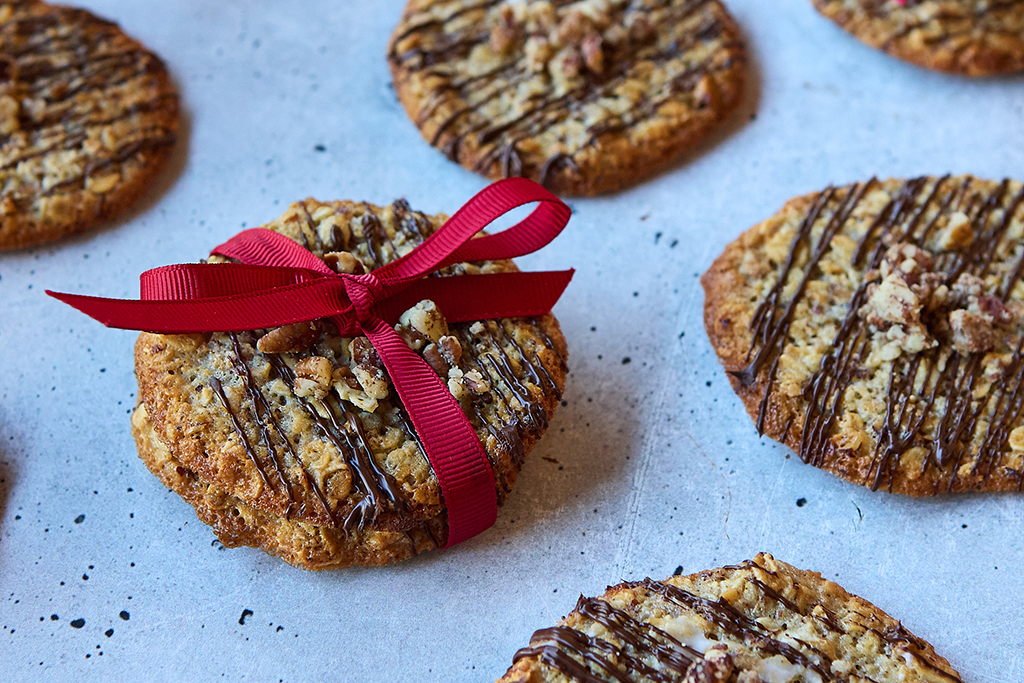
Recipe of the Month: Oat Crisp Cookies

A delicate, traditional Scandinavian cookie made with oats, rye flakes, and a drizzle of bittersweet chocolate. I plan to make these part of my Valentine’s Day gift-giving treats! For the best texture, toast the pecans until fragrant, then cool completely before grinding so they stay nutty, not oily. I make them gluten-free — though you wouldn’t know it unless I told you — but you can make them with regular flour if you’d like. You might consider doubling the recipe, as they’ll disappear fast. 

Makes 21 3-inch cookies

Printable PDF of this version here.

1 cup granulated sugar 

2 eggs 

2 Tbsp gluten-free flour mix (we recommend Bob’s Red Mill GF 1-to-1); or sub all-purpose flour 

1 cup rolled oats 

3 Tbsp rye flakes 

1 tsp baking powder

1/3 cup pecans, toasted and finely ground (walnuts are great also) 

1/3 tsp kosher salt 

3 1/2 Tbsp unsalted butter, melted

1/2 tsp vanilla extract

1/4 cup bittersweet chocolate chips 

In a stand mixer fitted with the whisk attachment, beat the sugar and eggs at medium speed for 3 to 5 minutes, until light and fluffy in texture. 

In a small bowl, combine the flour, oats, rye flakes, baking powder, pecans, and salt. 

With the mixer at low speed, gradually add the oat mixture. Add the melted butter and vanilla and mix thoroughly. Let the cookie dough sit at room temperature for 30 minutes. 

Preheat oven to 375°F and line 3 rimmed baking sheets with parchment. 

Using a tablespoon to portion the dough, drop 9 cookies per baking sheet. Flatten slightly to make a round or heart design. These cookies spread, so leave 1 to 2 inches between each cookie. 

Bake for 5 to 8 minutes, or until lightly golden brown in the center and deeper brown at the edges, rotating the baking sheets a few times for even baking. Remove from the oven and transfer the cookies to a wire rack to cool. 

Melt the chocolate chips in a water bath: Fill a medium saucepan with a few inches of water and set a small heatproof bowl over the top (the bowl should not touch the water). Using a spatula, melt the chips completely, then remove from the heat. Using a spoon, drizzle chocolate over the cookies and let cool to set. 

Store in an airtight container for freshness.