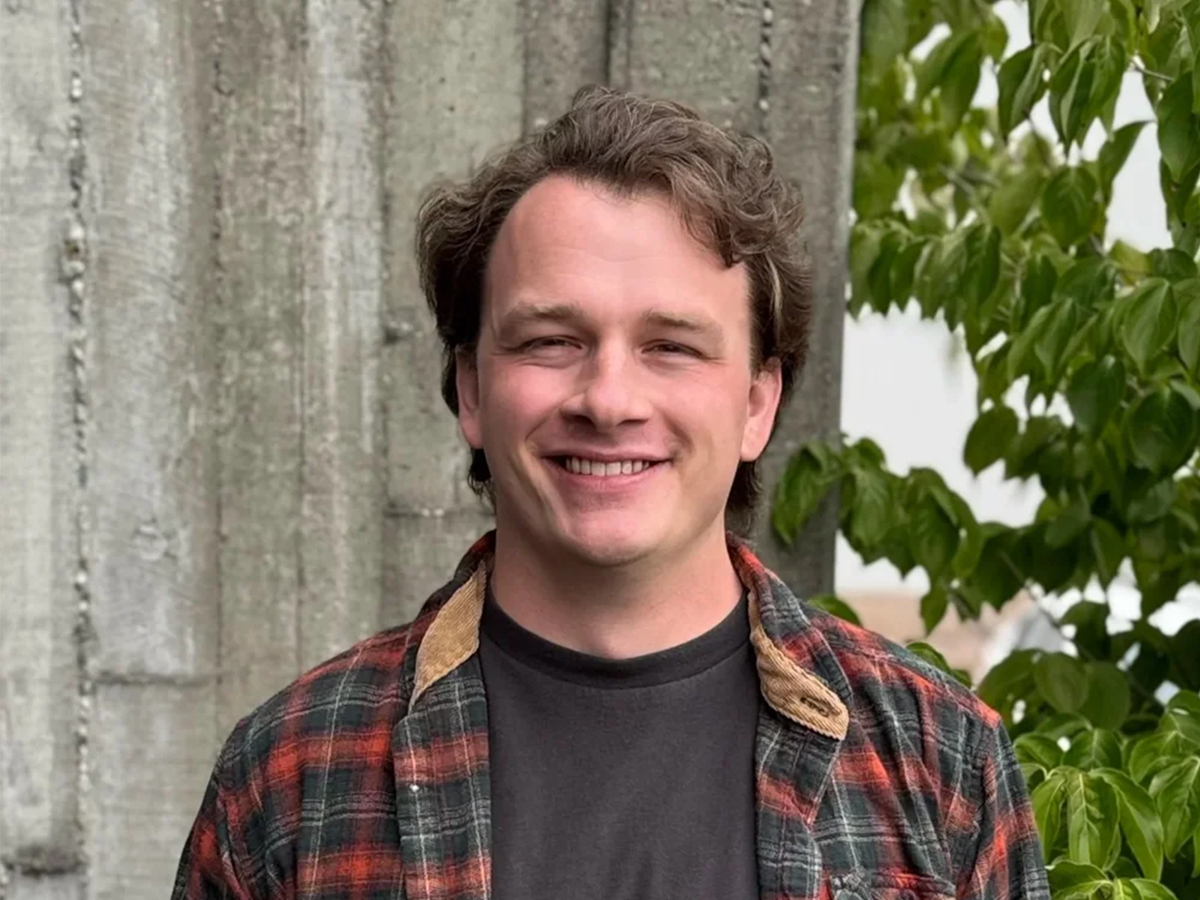
Erik Carlsen joined Macrina in the late summer of 2021 as a customer service representative. Before long he was pitching in across the bakery, with stints in a few departments, including accounts receivable. In 2023 he moved into sales, and in 2024 he was promoted to general manager. He’d come to Macrina from Supervalu/UNFI, where he spent a few years, first in the warehouse and later in charge of refrigerated cargo.
Today Erik is the wholesale sales general manager. He handles relationships with the bakery’s top 50 customers, onboards new accounts and looks for new business. The sales team, as he puts it, is small but mighty. He and his assistant manager, Ryan, make up the entire boots-on-the-ground crew.
Erik gets to the bakery around 6 a.m. He checks in with the delivery, office, accounts receivable and production teams before touching base with Ryan. Once he’s through his inbox, he hits the road between 8 and 9, visiting existing customers and meeting with new and prospective accounts. He’s usually off the road by noon or 1, when he recaps the day for the team, plans the days and weeks ahead and answers whatever’s left in the inbox.
What he enjoys most is the unpredictability. “You can plan as much as you’d like, but each day unfolds in a fun and unpredictable way,” he says. The constant momentum and the travel keep the days exciting. The work has grown a lot since he started. The bakery has expanded its delivery range to reach Lake Stevens, Lakewood and Port Gamble, onboarded hundreds of new accounts and added fresh pizza dough and a range of custom products. He’s proud of how the team keeps reaching for better products and better service.
His favorite thing about Macrina is what happens when something goes wrong. “Whenever an issue arises everyone from every team jumps on it,” he says, which means most problems get solved before a customer ever notices. What sets the place apart, he adds, is the transparency. If you have a question, you know who to ask, and you feel free to ask it.
Born and raised in Tacoma, Erik spent a couple of years in Seattle before settling back in Tacoma’s North End. He loves Puget Sound and gets to travel around it for work. In his free time he plays bass, goes to shows, reads, writes, watches movies, exercises and cooks.